

 Control and Automation Technician
Want to work with advanced control and automation systems?
On this page you will find comprehensive information about the profession of instrumentation, control and automation technician: what the role involves, what technological knowledge and programming skills are required, and how to determine if you are suitable for the world of industrial control, automation and scientific instrumentation. Career guidance is done online here on the site, start now!
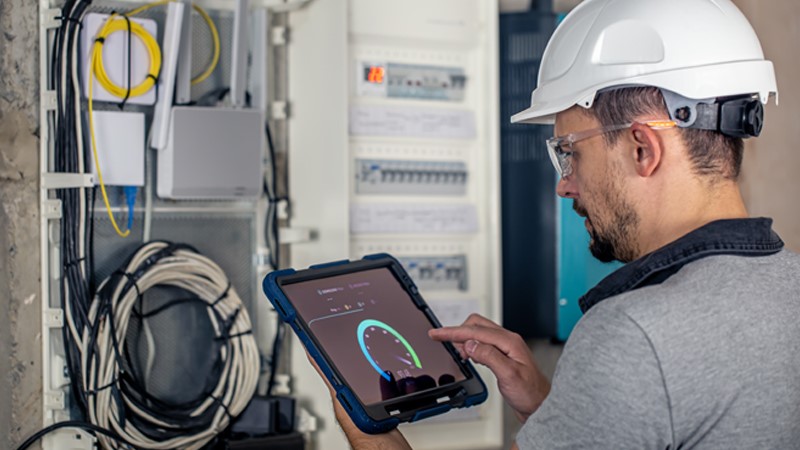
A Control and Automation Technician is a technological profession that combines fields such as physics, electronics, electricity, computers, and automation. The role of a Control and Automation Technician is to operate and maintain automated systems in various industries such as chemical industry, robotics, food, and electronics. The automated systems include programmable controllers, sensors, and computing systems that function to regulate and monitor parameters such as temperature, pressure, flow, and energy in machines and production lines. The job requires the ability to work with advanced technologies, solve technical problems in real-time, and ensure that automation systems operate properly and without malfunctions. Tasks also include routine maintenance, upgrading systems as needed, and solving problems in real-time to prevent failures and shutdowns.
Tests and Characteristics
Candidates being tested for this position may be required to take the following tests:
Memory - Names 4
Memory - Digits 10
Shape Matching 4
Mechanical Reasoning 5
Diagrammatic Reasoning 8
Figural Perception Flexibility 3
Mental Arithmetic 5
Number Sequences 6
Verbal Analogies 4
Sequence Matching 4
Mental Rotations 4
Information and additional options:
