Logipass
English
Enterprising-oriented Content Editor Description

Content Editor

Linguistic Editing Content Editing

Want to create and edit quality content?

On this page, you will find comprehensive information about the content editor profession: what the role involves, what writing and editing skills are required, and how to determine if you are suited for the world of content creation and digital media. Career guidance is done online here on the website, start now!

Editors are responsible for editing written materials in its various aspects, such as linguistic editing (for example, correcting spelling and syntax errors), substantive editing (for example, improving the accuracy and clarity of the written material) and literary editing (for example, rewriting paragraphs with poor style), while AI-based tools now assist in basic editing and error detection. In addition, editors help writers adopt correct writing habits and identify ways to improve writing flow, especially in cases requiring judgment, linguistic sensitivity, and a deep understanding of context and content.

Career guidance for a position Content Editor


What do you get after an exam for Content Editor
To view errors, go to the card then press the button show mistakes.
skills
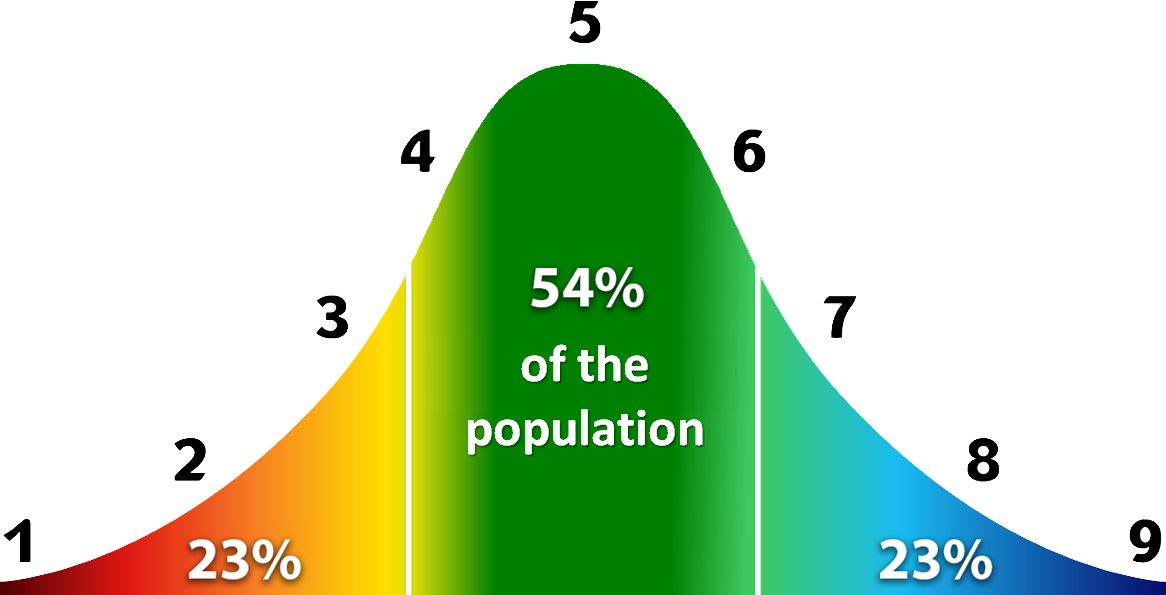
(9 sections distribution)
9 very high (4%)
 
4%
9) Indicator 96-100, ~ 4% higher points, ~ 96% achieved a lower score (4% achieved exactly this point) - ~ about 4% of candidates have this point, which means that they are special persons.
8 high (10%)
 
7%
8) Indicator 89-96, ~ 4% got a higher score, ~ 89% got a lower score (7% achieved this exact score) - ~ About 10% of candidates have this score (or higher), that is, some people are in this rating and above.
7 above average (23%)
 
12%
7) Scoring 77-89, ~ 11% got a higher score, ~ 77% got a lower score (12% achieved this exact score) - ~ About 1/4 of candidates have this score (or higher), which means a small fraction of candidates.
6 high average (40%)
 
17%
6) Indicator 60-77, ~ 23% got a higher score, ~ 60% got a lower score (17% achieved this exact score) - ~ about 40% of candidates have this score (or higher), which means the level is slightly above average.
5 average (50%)
 
20%
5) Indicator 40-60%, ~ 40% got a higher score, ~ 40% got a lower score (20% got this exact score). ~ This is an average score, half of the candidates get a higher score and half a lower score.
4 low average (60%)
 
17%
4) Indicator 23-40%, ~ 60% got a higher score, ~ 23% got a lower score (17% achieved this exact result). - ~ About 60% of candidates have achieved a higher level, which means that the level is slightly below average.
3 below average (75%)
 
12%
3) Indicator 11-23%, ~ 77% achieved a higher score, ~ 11% achieved a lower score (12% achieved exactly this point) - ~ about 3/4 of candidates achieved higher scores than this level.
2 low (90%)
 
7%
2) Indicator 4–11%, ~ 89% achieved a higher score, ~ 4% achieved a lower score (7% achieved exactly this point) - ~ about 90% of candidates achieved a higher level than this level.
1 very low (96%)
 
4%
1) Indicator 0-4%, ~ 4% below points, ~ 96% achieved a higher score (4% achieved exactly this point) - ~ Almost all candidates received higher scores than this level.

The [9] Scale: Represents the percentile of population that will reach or surpass this grade.
This implies the majority of the population will score 4, 5 or 6 and only a fraction will score 9 or 1.
personality
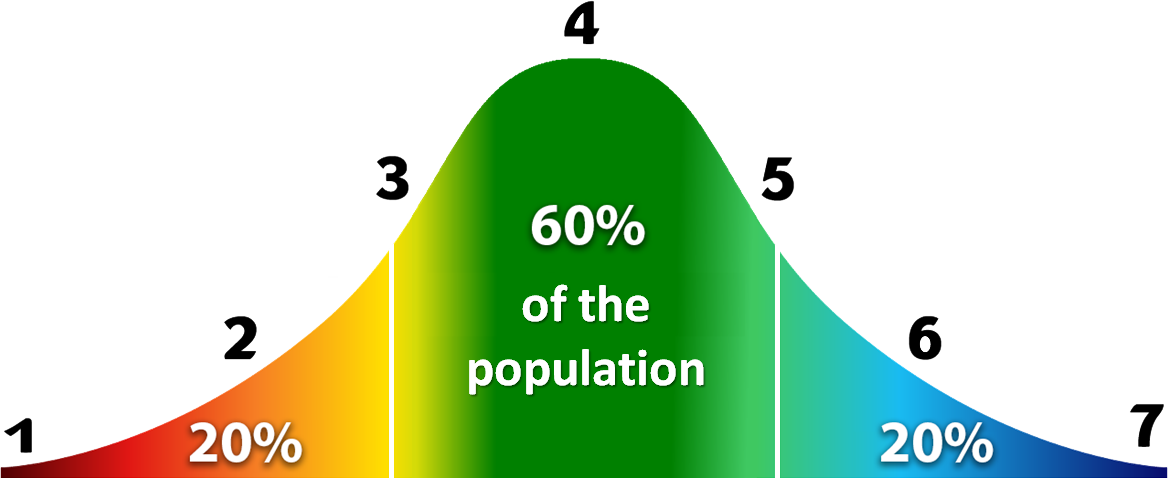
(7 sections distribution)
7 Very high (5%)
 
5%
Might 96-100%, top 5% of the population, 95% have a lower score (5% have just reached this mark) About 5% of the population is in this grade, which means they are individuals of virtue.
6 High (15%)
 
10%
Masons 86-95%, 5% scored higher, 85% scored lower (10% scored exactly) - about 15% of the population is (or higher), which means a small proportion of the population.
5 Average - High (35%)
 
20%
Masons 66-85%, 15% have a higher score, 60% have a lower score (20% have just reached this score), and about 35% of the population is (or higher), which means the level is slightly above average.
4 Average (50%)
 
30%
Masons 36-65%, 35% have a higher score, 35% have a lower score (30% have just scored) This is the average grade, half the people score higher and half lower score.
3 Average - Low (65%)
 
20%
Masons 16-35%, 65% scored higher, 15% scored lower (20% scored exactly), and 65% of the population achieved higher than this level, which means the level is slightly below average.
2 Low (80%)
 
10%
Masons 6-15%, 85% scored higher, 5% scored lower (10% scored exactly), and 85% of the population achieved higher levels than this.
1 Very low (95%)
 
5%
Masters 0-5%, 5% lower grades, 95% scored higher (5% scored exactly), almost all examinees achieved higher levels than this.

The [7] Scale: Represents the percentile of population that will reach or surpass this grade.
This implies the majority of the population will score 3, 4 or 5 and only a fraction will score 7 or 1.

The Personality Report is based on research conducted by Logipass that observed how a person ranks himself, his views and the way others rate him.

The scores range from "very high" to "very low" and are statistically relative, i.e. "very high" is relatively high in comparison to the population and in other words reflects the fact that the majority of people rank lower in a specific metric.


Tests and Characteristics

Candidates being tested for this position may be required to take the following tests:

Diagrammatic Reasoning 8
General thinking ability Abstract thinking Visual perception Analysis ability
Verbal Reasoning 6
Verbal ability Analysis ability
English Knowledge and Comprehension 4
English language proficiency Didactic ability
Computer applications proficiency 6
Didactic ability Digital literacy
Verbal Analogies 4
General thinking ability Abstract thinking Verbal ability Analysis ability
Inductive Reasoning 4
Abstract thinking Visual perception Spatial perception Perceptual flexibility
Shape Recognition 3
Visual perception Perceptual flexibility Analysis ability
Memory Test - Chores 5
Everyday memory Verbal ability Didactic ability
Memory Test - Names 4
General thinking ability Everyday memory Verbal ability Didactic ability
Sequence Matching 4
Agility and accuracy
Shapes Matching 4
Perceptual flexibility Agility and accuracy

Information and additional options:

Career Guidance Education guidance Career guidance for discharged soldiers Career counseling
Logipass
This site offers the option to use an accessibility component. You can turn off this option.

Select how long the button will be hidden: