Sample psychotechnical tests
Want to try a full aptitude test, with a time limit and under real exam conditions?
Take a free sample aptitude testSample psychotechnic tests are an important tool for employers looking to screen candidates efficiently and effectively. These tests assess cognitive skills, verbal and mathematical abilities, as well as personality traits relevant to the role. Examples of psychotechnic tests include tests that examine verbal ability, memory, technical comprehension, arithmetic reasoning, English proficiency, abstract thinking, and more, as presented on this page. Familiarity with a wide range of sample tests allows employers to understand the range of available options, and subsequently design the ideal profile for each position in the organization using the service system that LogiPass provides. Candidates can independently experience sample psychotechnic tests through the flexible practice kits that LogiPass offers for purchase. This allows for optimal preparation for the tests expected in the various screening processes. LogiPass provides an extensive database of sample psychotechnic tests, the option to practice tests for free in demo mode, as well as a flexible system adapted to a variety of professions and roles. Experiencing sample tests contributes to effective preparation and improves your chances of arriving ready and well-prepared for the real test.
In this test, you will be presented with a pair of words in bold (the "question").
You need to identify the relationship between these two words.
Then, you need to choose the pair of words that has the most similar relationship to the relationship between the pair of words in bold.
Note: The order of the words in the pair is important.
The "Verbal Analogies" test examines the ability to identify the relationship that exists between two words appearing in the example and to find an additional pair of words in which this relationship holds. This skill is related to verbal ability and constitutes a significant part of human intelligence, inductive reasoning (the ability to infer from a specific case to a general rule), everyday logic, learning ability, and more.
Tree:
The roof is the upper part of a house. Therefore, we need to find the upper part of a tree. The upper part of a tree is the treetop, so the parallel relationship is: Tree: Treetop.
The relationship is between a body part and a professional whose work is related to it: an optometrist works with eyes/vision, just as a dental hygienist works with teeth. The other pairs do not maintain the same relationship between a body part and the appropriate professional.
The relationship between shallow and deep is a relationship of degree along a spatial scale: shallow describes a small depth, and deep describes a great depth. Therefore, we need to find a pair of words that also describes two ends of a spatial scale.
Low and high are on a scale of height, so this is the most suitable pair. The other pairs express general opposites, but they do not maintain the relationship of two ends of a spatial scale.
In this test you’ll be presented with complex written instructions. You’ll need to follow the instructions and choose the correct answer.
The "Understanding Written Instructions" test is designed to assess an individual's ability to understand written verbal instructions and apply them appropriately. This skill is particularly important and required in fields where numerous and/or complex instructions are given and there is a need to understand and execute them accurately.
In this test, you will see a sequence of numbers. The numbers are connected. You need to understand
the rule that connects the numbers and decide which number comes next (replacing the question
mark). This test includes 25 questions.
You will have 9 minutes to answer.
The "Number Sequences" test examines the ability to understand rules within a numerical series, using inductive and deductive reasoning. This skill has been considered a significant component of human intelligence for many decades.
Sample Cognitive Test
A sample cognitive test is an assessment tool used to examine the intellectual and mental abilities of the test-taker. The primary purpose of the test is to characterize the level of cognitive functioning, focusing on a wide range of skills and abilities. Among the abilities measured in a cognitive test, one can find memory, attention and concentration, information processing speed, spatial perception, logical thinking, complex problem-solving, agility, accuracy, and overall output. The test is designed to provide a comprehensive picture of the test-taker's cognitive potential and their ability to cope with diverse intellectual challenges. The test results can serve as an aid in the screening and evaluation processes of candidates for various positions. Familiarity with the range of cognitive abilities measured can help the employer, together with the service and the account manager that LogiPass provides, to optimally design the role profile. Candidates can experience the ready-made kits that the website offers for any position they choose and focus on what particularly challenges them, thanks to the flexibility that the practice kit allows.
In this test, you will see sequences of shapes.
In each question, you need to identify the pattern in the sequence and choose the shape that should replace the question mark.
The pattern may follow the spiral direction of the shell, or it may follow a matrix-like structure, where the sequence continues in a straight line - from right to left, from left to right, from top to bottom, or in another direction.
This test includes 25 questions, and you have 13 minutes to complete it.
The "Diagrammatic Reasoning" test examines the ability to conclude about the rules that exists between the shapes that the examinee sees. This skill is related to the cognitive potential (general intelligence - G) that a person has, and it can also be tested in a culture-independent manner.





The correct answer is a hexagon.
If we look at the series of shapes from the center of the shell (a single line) outward (toward the question mark), we can see that each shape has one more line than the previous shape. Thus, the first shape has one line, the second has two lines... We are looking for a shape with six lines.
Please note: In this question, the series progresses in a spiral manner, meaning from the center of the shell to its edges.





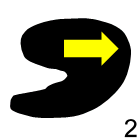
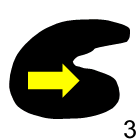
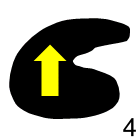
In this case, the structure of the shapes does not move outward from the center of the shell. Looking at the shapes below, we can see a row that develops from left to right, with each shape rotating by a quarter turn (90 degrees) compared to the previous shape.
Thus, the first shape has its "head" pointing upward, the second has its "head" pointing to the right, and the next shape in the series should have its "head" pointing downward. Applying this conclusion to the top row leads us to the solution.
Please note: In this question, the series progresses in a matrix-like manner, meaning by rows/columns.





The correct answer is: a large black star.
If we examine the two top rows, we can see that there is a pattern made up of two aspects.
On the left, we see a small white shape; in the center, we see a larger gray shape; and on the right, we see the largest black shape. In other words, as we move from left to right, the shapes get larger and darker.
Based on the pattern we identified from the circle and square shapes, we will try to find the correct answer for the star shape. We are looking for a black star, so answers with a gray star are not suitable. In addition, we are looking for a star larger than the stars already shown on the spiral, so an answer with a small black star is not suitable.
Please note: In this question, the series progresses in a matrix-like manner, meaning by rows/columns.
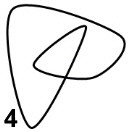
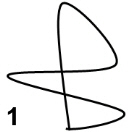
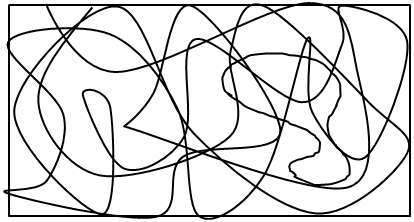
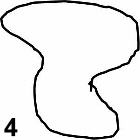
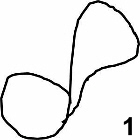
In this test, you will be presented with a drawing and four different shapes below it.
One of the four shapes will appear in the drawing exactly as you see it.
You need to select the correct shape.
The "Figural Perception Flexibility" test measures the ability to separate visual stimuli in order to identify a hidden target shape. This skill is required in jobs that demand complex formal thinking, spatial understanding and planning.
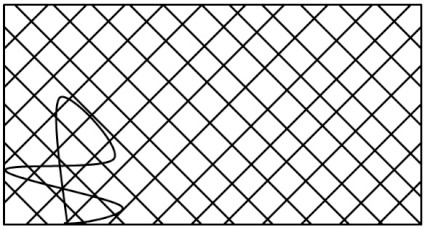
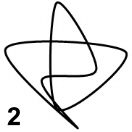
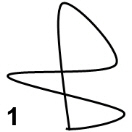
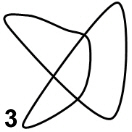
1 is the correct answer.
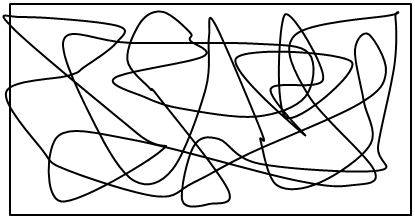
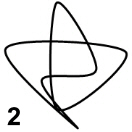
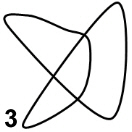
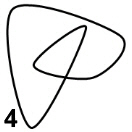
2 is the correct answer.
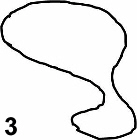
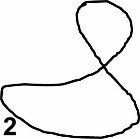
3 is the correct answer.
Logic Test
Logic is one of the most important skills measured in psychometric tests, and it is also a critical skill for success in the real world. Logic tests assess our ability to think rationally, analyze information, solve complex problems, and draw logical conclusions. These skills are required in many fields, from business decision-making and project management to scientific research and technological development.
To succeed in logic tests and develop sharper logical thinking, practice is essential. On the LogiPass website, you will find a wide range of high-quality practice tests and exercises that simulate the types of puzzles and challenges you will encounter in real tests. The questions include analogies, pattern sequences, verbal problems, quantitative problems, and more. This will allow you to discover diverse problem-solving strategies and real-world applications.
The website allows you to practice only what you want, and it will show you your strengths and weaknesses, so you can focus your training on the areas where you need the most improvement. Whether you struggle with certain types of logical puzzles or aspire to deepen your expertise in a specific domain.
Investing in improving your logical skills through the comprehensive training offered by LogiPass is a wise decision, not only for success in psychometric tests but also for success in your career and life in general. Sharp logical thinking is a valuable asset in any field and profession, and it provides a significant advantage in a competitive world. So don't miss the opportunity to sharpen your logic and reach new levels of excellence. Join LogiPass today and embark on your journey to full mastery of logical thinking and success in every challenge you encounter.
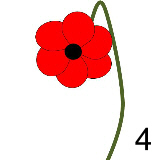
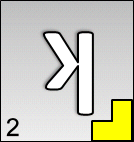
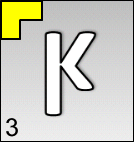
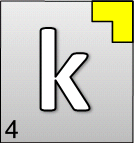
In this test, you will be presented with a shape and four similar shapes below it.
One of the shapes below will be an inverted reflection of the original shape (as one would see when presenting the shape in front of a mirror).
You need to select the correct reflected shape.
The "Mental Rotations" test examines the ability of the test-taker to imagine the presented shape after mentally rotating it. This skill of mental rotation is part of spatial abilities, but constitutes a separate factor from the ability to perceive shapes, since the rotation is performed 'in the mind', and therefore it can also indicate working memory abilities, and even the potential for abstract thinking.







In this test you will be presented with arithmetic exercises.
For some of the exercises you'll be asked to select the accurate answer,
Using the four basic arithmetic operations:
Addition (+), subtraction (-), multiplication (*) and division (: or /).
In other exercises you'll be asked to estimate the result and not to calculate it accurately.
Oral only! Calculator or writing tools prohibited.
The "Mental Arithmetic" test examines the ability of the examinee to perform calculations based on the four basic arithmetic operations, while providing an exact or approximate answer to the correct answer. This skill is directly related to numerical ability, but also to the didactic aptitude which reflects, among other things, the potential for future learning.
1/2-1/7
The denominator remains unchanged, as it is identical (14). We subtract the nominators one from the other (7 minus 2), and receive 5 in the nominator. 5/14 is a fraction close to 5/15, which is 1/3. Therefore, the answer is 1/3.
14+23
Next, add the decimal numerals, which are written one above the other: 1+2=3
23
+
14
-----
37
A second way to solve the exercise is to dismantle the smaller number (14) into 10 and whatever is left (4). Next, add 23+10=33. Finally, add 4 to 33, and the result is 37.
What is the approximate result of 7,388+844
By long addition, explained in the first example, one can reach the answer 8232. Out of all the options presented, 8,231 are the closes to the right answer.
How much is 15% out of 600?
600*10
_______
100
Because we have a multiplication operation, we can lose the zeros in the nominator (top part of the fraction) with the zeros in the denominator (bottom part of the fraction). We are left with 10*6=60. Meaning- 10% out of 600 are 60. Now we need to find out how much are the additional 5%, in order to reach 15%. For that, we can divide the 10% we have already calculated in 2, so we will have 5%: 60/2=30. Now we can add 10%+5%, which are 60+30=90.
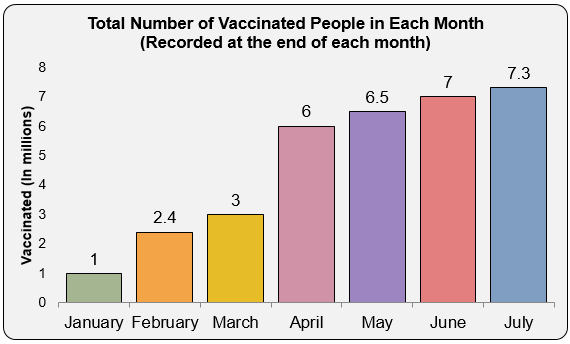
In this test, you will be presented with data in the form of a table or chart.
For each question, you need to examine the data presented and select the most appropriate answer based on that data.
The "Data Interpretation" test examines the ability to read data presented in graphical or tabular form, and to draw conclusions from it. This skill demonstrates analytical, comprehension, and inference abilities, and is also linked to general intelligence.
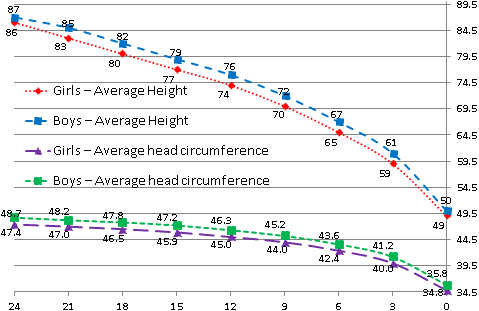
We can see that the height curve for boys (which starts at 50 and ends at 87, and is drawn as a dashed blue line) is always above the height curve for girls (which starts at 49 and ends at 86, and is drawn as a dotted red line).
In the following test, each question will present two sequences (a sequence of letters, symbols, and numbers).
You need to examine them and decide whether they are identical or different.
The "Sequence Matching" test measures a person's ability to work accurately and quickly in identifying differences between simple stimuli. This type of skill is important in administrative and clerical jobs of various kinds; however, accurate work is also required in tasks such as programming, actuarial work, information systems management, and more.
The third character in the right sequence is "k", while in the left sequence it is "t".
The second character in the right sequence is "&", while in the left sequence it is "%".
In the following test, you will be shown images describing a variety of situations.
For each question, you need to select the option that describes the most logical situation based on the information provided in the question.
The "Mechanical Reasoning" test examines the understanding of basic mechanical-technical principles, simple machines, tools, and basic knowledge of electricity. This skill is related to technical thinking and the ability to solve practical problems in the technical field.
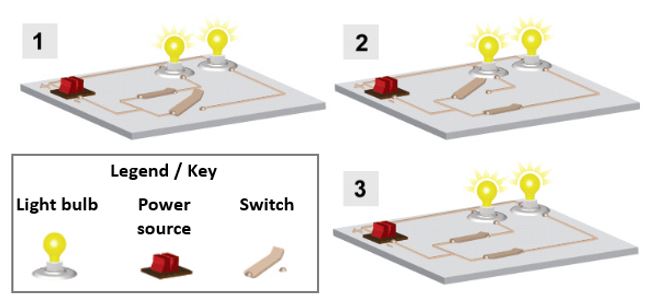
When the electric circuit is closed, electricity can flow through the circuit and reach the corresponding bulb. In answers 1 and 2, only one of the circuits is closed, so in these answers one of the bulbs does not receive electric current.
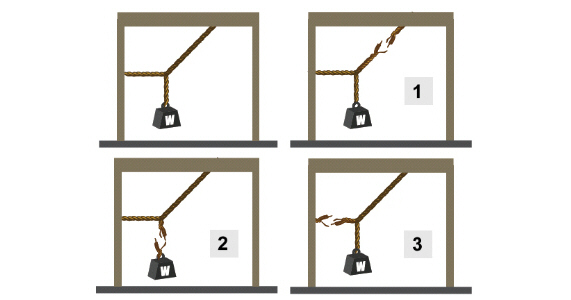
The reason is that the rope is tied diagonally, so both a vertical force and a horizontal force act on it, while only one of the forces acts on the other ropes.
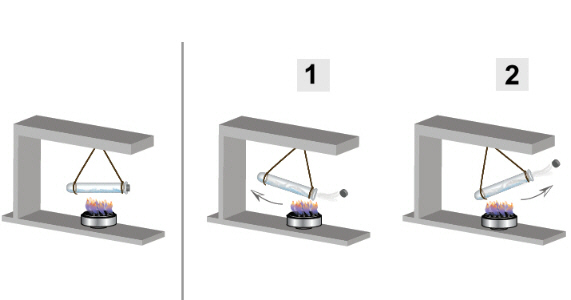
When the test tube is heated, the water inside the test tube also heats up, and the pressure inside the test tube rises.
When the pressure reaches a high enough level, it pushes the cork out. As a result of the pressure, the cork will fly in one direction and the test tube in the opposite direction.
In the following test, each question will present two areas, each containing 10 shapes.
You need to match the shapes by clicking a shape in one area and then immediately clicking the identical shape in the other area.
Selecting identical shapes will make the selected shapes disappear from the screen, allowing you to move on to the next pair.
If the test is being taken on a laptop, it is recommended to use a mouse.
The "Shape Matching" test measures the ability to work quickly and accurately in space, the ability to locate specific symbols, and the ability to work with a mouse. These skills are required in jobs that demand visual precision, such as reading drawings, locating information on busy screens, and general executive agility.
In the following test, you will be presented with sentences in English, each with one missing word.
Choose the word from the answer options that best completes the sentence.
The "English Proficiency - Reading Comprehension" test examines the ability to complete sentences in English, in addition to reading and comprehending a text. This skill is essential in the workplace across many fields, and can also indicate general learning ability.
The other words, "dream", "checkerboard" and "intelligent", are not suitable for completing the sentence.
The other words, "going", "holding" and "searching", are not suitable for completing the sentence.
The other words, "see", "listen" and "talk", are not suitable for completing the sentence.
In the following test, you will be presented with a text in English, followed by 5 questions related to it.
You need to read the text and answer the questions accordingly.
In the first part, the text will appear on its own, without questions, so you can read it.
Afterwards, the questions will appear, and the text you read will continue to appear beside them in a smaller window.
Any time not used in the text-reading part will be transferred to the questions part.
The "English Proficiency - Reading Comprehension" test examines the ability to complete sentences in English, in addition to reading and comprehending a text. This skill is essential in the workplace across many fields, and can also indicate general learning ability.
You are about to take a test that assesses your knowledge of hardware and operating systems.
This test includes 20 questions, and the time limit is 15 minutes.
The "Hardware and Operating Systems" test assesses professional knowledge in computers, with an emphasis on hardware and operating systems topics. Knowledge in this field is required mainly in technological roles at various levels.
In this test, you will be shown 15 sequences of digits, each containing 3 or more digits.
You must memorize the sequence of digits displayed in the upper box, from memory only! Writing it down is not allowed.
After you have finished memorizing the sequence of digits, you must close the upper box and type the digits, in the order in which they appeared, in the lower box.
The "Memory - Digits" test examines the ability to remember a number of digits for a short time. This short-term memory skill, also known as "working memory", is very important in all areas of life as it forms the basis for performing tasks in general, and multiple tasks simultaneously in particular.
In this test, you will be shown a list of names. You must memorize the names displayed, by memory only! Writing them down is not allowed. You will have 2 minutes for the memorization stage. You may proceed before the time is up, but it is recommended to use the time to memorize the list. You will not be able to return to the list afterward. In the next stage, you will be asked to match the first names to the last names, as they appeared in the original list. Please note! You must memorize the list of names above before clicking “Start the example”.
for example,
The list of names is:
Violet & Moshe Smith
Olivia & Henry Williams
David & Sharon Johnson
The "Memory - Names" test examines the ability to remember several new names in their full form, and then to correctly match the last name to the first name. Long-term memory is considered one of the components of human intelligence, since this skill is one of the tools we have in order to achieve goals.
In the following test, the source text will appear at the top of the screen.
At the bottom of the screen, you need to type the source text yourself, character by character, so that it is completely identical to the original text, including spaces and other details.
The typing must be continuous, without a line break (without pressing Enter).
The "Typing Speed" test examines the ability to type text quickly while maintaining a high level of accuracy. This skill can indicate, among other things, attention to detail, precision, and speed of task execution, and it is especially relevant for administrative and clerical jobs of various kinds.
The following questionnaire consists of 18 questions. For each question, you must choose the best possible answer (you can select only one answer per question).
The test must be taken independently, without using any additional sources or aid.
It is essential to answer the questions as quickly as possible.
You have 20 seconds to answer each question.
The "Computer Applications Proficiency" test examines knowledge related to various computer applications and their use, with an emphasis on Office applications and email. This knowledge reflects the level of technological literacy, which indicates the examinee's potential in terms of speed and efficiency when working with computerized systems.


In this test, you will be presented with sentences in which one word is missing.
Choose the word from the answer options that best completes the sentence.
The "Hebrew Language Proficiency" test examines the ability to complete simple sentences in Hebrew, as this ability reflects overall language proficiency and the ability to communicate at a basic level in Hebrew.
In this test, you will be presented with questions on accounting.
This test is currently in beta, and we would appreciate your feedback to improve it.
Therefore, you will now be shown 2 questions regarding your experience in the field, followed by 2 sample questions.
The “Bookkeeping Knowledge - Basic” test assesses knowledge and understanding of the fundamental principles of bookkeeping, including accounting documents, journal entries, ledgers, debit and credit balances, VAT, basic reconciliations, and the recording of accounting transactions. This test reflects the candidate’s basic accounting knowledge and ability to carry out routine bookkeeping tasks correctly, accurately, and in an organized manner.
Of course there is no "correct" answer to this question — what matters is that we collect accurate information about your experience in the field.
Of course there is no "correct" answer to this question — what matters is that we collect accurate information about your training in the field.
A price quote is given before the transaction takes place and details the proposed price and terms. It does not confirm payment or reverse a charge.
When paying a vendor from the bank, the bank account is credited — meaning the bank balance in the books decreases.
In this test, you will be presented with questions on accounting.
This test is currently in beta, and we would appreciate your feedback to improve it.
Therefore, you will now be shown 2 questions regarding your experience in the field, followed by 2 sample questions.
The “Bookkeeping Knowledge - Senior” test assesses the knowledge, judgment, and ability required to manage and lead complex accounting processes, including monthly, quarterly, and annual closings, cut-offs and accruals, internal controls, audit preparation, management reporting, fixed assets, and process control. This test reflects the ability to analyze irregularities, exercise professional judgment, identify accounting risks, and carry out controls that support reliable and accurate financial reporting.
Of course there is no "correct" answer to this question — what matters is that we collect accurate information about your experience in the field.
Of course there is no "correct" answer to this question — what matters is that we collect accurate information about your training in the field.
A control checklist is meant to ensure all material closing steps are performed and documented. Without one, the main risk is that important actions will be omitted, or there will be no evidence they were performed.
A change in classification policy can affect how expenses are presented between periods. Without documentation and explanation, it is difficult to know whether a change in the reports stems from actual activity or from a change in accounting policy.
In this test, you will be presented with questions on accounting.
This test is currently in beta, and we would appreciate your feedback to improve it.
Therefore, you will now be shown 2 questions regarding your experience in the field, followed by 2 sample questions.
The “Bookkeeping Knowledge - Professional” test assesses the knowledge and ability required to independently manage ongoing bookkeeping processes, including reconciliations, month-end closing, cut-off handling, fixed assets, supplier and customer ledgers, accounting controls, and the resolution of irregularities. This test reflects the ability to apply professional knowledge, identify accounting issues, and make sound decisions as part of day-to-day work.
Of course there is no "correct" answer to this question — what matters is that we collect accurate information about your experience in the field.
Of course there is no "correct" answer to this question — what matters is that we collect accurate information about your training in the field.
A payment with no reference requires clarification before it is matched or corrected. First identify the source of the payment and the supporting document.
An invoice already closed in the ledger may indicate a payment was already made. So before approving another payment, check whether this is a duplicate payment.
In this test, you will be presented with questions regarding knowledge of the Priority application.
This test is currently in its trial phase, and we would appreciate your feedback to improve it.
Therefore, you will now be asked 2 questions about your experience in the field, followed by 2 example questions.
The “Priority Implementation Knowledge” test assesses the knowledge and understanding required of Priority implementers, including business process analysis, requirements specification, system configuration, links between modules, permissions, statuses, reports, integrations, data migration, process control, and troubleshooting implementation-related issues. This test reflects the candidate’s professional ability to understand organizational needs, translate them into practical solutions within Priority, and support the implementation of accurate, consistent, and maintainable work processes.
Of course, there is no "correct" answer to this question — what matters is collecting accurate information about your experience in the field.
Of course, there is no "correct" answer to this question — what matters is collecting accurate information about your training in the field.
A customer card holds basic details and settings about the customer. A customer invoice is created as part of a sales or billing process, so it is not master data.
To diagnose a system issue, the implementer needs to understand which document and action are involved. Without these details, it's hard to know whether the problem stems from a permission, a status, missing data, or a business rule.
In this test, you will be presented with questions about programming knowledge - Python. This test is currently in testing phase, and we would appreciate your feedback to improve it. In light of this, you will now see 2 questions about your experience in the field, followed by 2 sample questions.
The “Programming Knowledge - Python” test assesses basic knowledge and understanding of Python programming, including syntax, data types, collections, functions, object-oriented programming, error handling, memory behavior, package management, writing code according to standard Python conventions, common mistakes, and basic performance considerations. This test reflects the candidate’s ability to read and understand Python code, identify common problems, and apply basic Python principles clearly and correctly.
There is, of course, no correct answer to this question; what matters is collecting accurate information about your experience in the field.
There is, of course, no correct answer to this question; what matters is collecting accurate information about your training in the field.
#<!-- -->///* */In Python, the # symbol is used to write a comment. Text after # on the same line is ignored by Python and is meant only for explanation or notes.
echo("Hello")write("Hello")print("Hello")console.log("Hello")In Python, print() is the built-in function used to display text or values on the screen. The text "Hello" must be placed inside quotation marks because it is a string.
In this test, you will be presented with questions on programming knowledge - JavaScript. This test is currently in beta, and we would love to get your feedback to improve it. Therefore, you will now be asked 2 questions about your experience in the field, followed by 2 sample questions.
The “Programming Knowledge - JavaScript” test assesses basic knowledge and understanding of JavaScript programming, including syntax, data types, collections, functions, object-oriented programming, error handling, runtime behavior, asynchronous code, package management, common pitfalls, and basic performance considerations. This test reflects the candidate’s ability to understand core JavaScript concepts, read simple code, identify common mistakes, and apply basic development practices correctly.
There is, of course, no correct answer to this question; what matters is collecting accurate information about your experience in the field.
There is, of course, no correct answer to this question; what matters is collecting accurate information about your training in the field.
console.log("Hello");undefinedErrorThe code uses console.log("Hello"), which prints the text inside the quotation marks to the console.
##//--**In JavaScript, // is used to write a single-line comment. Anything after // on the same line is treated as a comment and is not executed as code.
In this test, you will be presented with questions about programming knowledge - Java. This test is in trial mode, and we would appreciate your feedback to improve it. Therefore, you will now be presented with 2 questions about your experience in the field, followed by 2 sample questions.
The “Programming Knowledge - Java” test assesses basic knowledge and understanding of Java programming, including syntax, types, collections, methods, object-oriented programming, error handling, memory and runtime behavior, package management, testing tools, best practices, and common pitfalls. The test reflects the candidate’s ability to read and understand simple Java code, identify common mistakes, and apply basic Java development principles in a clear and practical way.
There is, of course, no correct answer to this question; what matters is collecting accurate information about your experience in the field.
There is, of course, no correct answer to this question; what matters is collecting accurate information about your training in the field.
methodobjectclassfunctionIn Java, the keyword class is used to define a class. Keywords such as method, object, or function are not used to declare a class.
.class.jar.java.txtJava source code files are saved with the .java extension. Files with .class are compiled files, .jar files are packaged Java applications or libraries, and .txt is a general text file.
In this test, you will be presented with questions regarding basic programming knowledge. This test is in a pilot phase, and we would appreciate learning from you to improve it. Consequently, you will now be asked 2 questions about your experience in the field, followed by 2 sample questions.
The “Programming Knowledge – Basics” test assesses basic programming knowledge at the junior level and general computational thinking skills, regardless of a specific programming language. The test covers programming fundamentals, problem solving, code comprehension, data structures, algorithms, edge cases, debugging, testing, clean code, data formats, and version control. It reflects the candidate’s ability to understand core programming concepts, read simple code, identify common issues, and apply basic software development practices.
There is, of course, no correct answer to this question; what matters is collecting accurate information about your experience in the field.
There is, of course, no correct answer to this question; what matters is collecting accurate information about your training in the field.
When a program prints something, it usually displays text or information so the user can see it.
Comments are used to add notes or explanations in the code. They help people understand the code but are not executed as program instructions.
Preparation for Psychometric Tests
Psychometric Test Practice – The Key to Achieving Your Goals
Success in a psychometric test can be critical for your future. Whether you aspire to be accepted to a prestigious academic institution, get your dream job, or advance in your career, an excellent test result can be a significant catalyst. However, to realize your full potential and achieve these goals, comprehensive and thorough practice is essential.
Psychometric tests measure a wide range of cognitive skills, from analytical thinking and reading comprehension to quantitative abilities and spatial perception. Systematic and structured training will help you improve and sharpen these skills, and arrive at the test prepared and confident.
LogiPass offers the ultimate platform for psychometric test practice. The site includes a rich and diverse repository of practice questions that simulate real tests. The practice will allow you to learn about your strengths and weaknesses, develop effective strategies, and reduce anxiety during the test.
Moreover, LogiPass's interactive and user-friendly interface allows you to track your personal progress, identify areas that need improvement, and adjust your training plan accordingly. Thanks to smart, focused, and personalized practice that is affordable for everyone, you can maximize your time and get the most out of each training session.
In conclusion, if you want to fulfill your aspirations and achieve exceptional results in the psychometric test, LogiPass is your perfect partner for the journey. Whether you're starting from scratch or looking to improve, the tools and resources the site provides will help you reach new heights. So don't wait any longer - start practicing today with LogiPass, and take your abilities a step forward to realize your full potential.